

MORE THAN 30,000 PATIENTS TREATED WITH YESCARTA*

YESCARTA® is a one-time treatment for adult patients with relapsed or refractory follicular lymphoma (R/R FL) after ≥2 lines of systemic therapy1

UNLEASH THE POTENTIAL WITHIN1†

img-m-hero-fl

YESCARTA® is a one-time treatment for adult patients with relapsed or refractory follicular lymphoma (R/R FL) after ≥2 lines of systemic therapy1

UNLEASH THE POTENTIAL WITHIN1†

PIVOTAL EFFICACY ANALYSIS (n=81)1

Follow-up time: ≥9 months‡

OBJECTIVE RESPONSE RATE§

91%ORR

(n=74/81)

COMPLETE REMISSIONII

60%CR

(n=49/81)

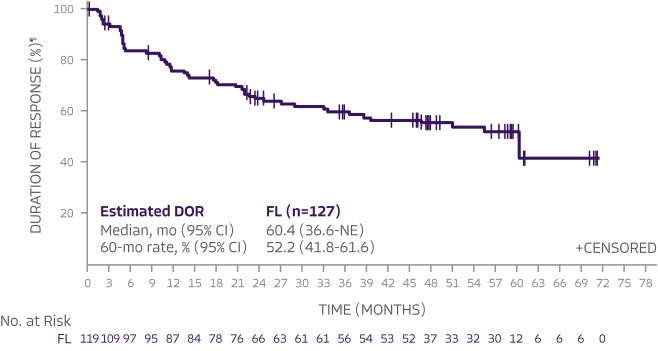
5-YEAR FOLLOW-UP ANALYSIS (n=127)2

Median study follow-up: 65.7 months2

DURATION OF RESPONSE3

60.4

MONTHS mDOR

(95% CI, 36.6-NE; n=119 responders)

ZUMA-5 (Study 3) was a phase 2, single-arm, open-label, multicenter trial evaluating the efficacy and safety of a single infusion of YESCARTA in adult patients with R/R FL who had received ≥2 prior lines of therapy, including a combination of anti-CD20 monoclonal antibody and alkylating agent.1,4 In total, 146 patients (124 with FL) were treated with YESCARTA and included in the safety analysis; 81 patients with FL were evaluable for efficacy.1 Please see US Prescribing Information for additional study information, including all inclusion and exclusion criteria.

The primary efficacy endpoint was ORR; select secondary endpoints included DOR, PFS, OS, and safety.4 The primary efficacy analysis included in the USPI for YESCARTA was performed using the inferential analysis set, which includes the first 81 of 120 patients enrolled with at least 9 months of follow-up from the date of first response.1,5 For FDA approval, efficacy was evaluated on the basis of ORR and DOR as determined by an IRC.1

In the USPI, mDOR (n=74 responders) was not estimable at a 14.5-month median follow-up for DOR.1 The rate of continued remission at 18 months was 74%.1 The 60-month follow-up data were evaluated using the full analysis set of ZUMA-5,# which includes 127 patients with FL enrolled in the trial.2 Three of these patients did not receive YESCARTA.2 The ~60-month follow-up analysis was based on investigator assessment.2

DOR is measured from the date of first objective response to the date of progression or death from any cause.1 mDOR from the ~60-month median study follow-up analysis is not included in the US Prescribing Information and should be carefully interpreted.

*Global commercial and clinical trial data in patients across the entire YESCARTA product line as of Q2 2026.

†Potential refers to that of CAR T therapy treatment.

‡Of the 120 patients with FL infused with YESCARTA, the 81 consecutive patients included in the primary efficacy analysis had at least 9 months of potential follow-up from date of first response.1

§Per the International Working Group Lugano Classification (Cheson 2014), as assessed by the independent review committee (primary efficacy analysis) and by investigator assessment (~5-year follow-up).1,2

||Complete remission required documentation of a negative bone marrow biopsy after treatment in patients who did not have a negative bone marrow biopsy between their most recent disease progression prior to ZUMA-5# and initiation of lymphodepleting chemotherapy.1

KM estimate.2,3

#The ZUMA-5 trial corresponds to Study 3 in the US Prescribing Information: see section 14.2.

~9 out of 10 patients with R/R FL responded to YESCARTA1

Remission rates1

60%

(n=49/81)

Complete remission (CR)||

31%

(n=25/81)

Partial remission (PR)
91%(n=74/81)Objective response rate (ORR)§

Objective response rate (ORR)§

Continued remissions demonstrated in ZUMA-5# (number of responders=74)
NE

Median DOR
(14.5-month median follow-up for DOR) 

74%
OF RESPONDERS

Continued remission at 18 months based on KM estimate

Durable and consistent outcomes over 5 years

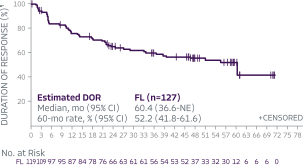
Duration of response at 5 years2,3¶

~65-month follow-up:

ORR: 94%CR: 79%

m-chart-response

The tick marks represent censored patients. Patients who did not progress, have not died, or received new anticancer therapy (including stem cell transplant) prior to documented progression were censored at their last evaluable disease assessment.

Reprinted from Neelapu SS, Chavez JC, Sehgal AR, et al. J Clin Oncol. 2025(suppl):JCO2500668. doi:10.1200/JCO-25-00668

The ZUMA-5# ~5 year follow-up data were evaluated based on investigator assessment and included 127 patients with FL enrolled in the trial.2 Three of these patients did not receive YESCARTA.2 The primary efficacy analysis included in the YESCARTA Prescribing Information was performed using the inferential analysis set, which includes the first 81 of 120 patients enrolled with at least 9 months of follow-up from the date of first response.1,5 For FDA approval, efficacy was evaluated on the basis of ORR and DOR as determined by an IRC.1 DOR is measured from the date of first objective response to the date of progression or death from any cause.

DOR data from the ~5 year analysis are descriptive, and the follow-up study was not powered or adjusted for multiplicity to assess efficacy. These data are not included in the Prescribing Information and should be carefully interpreted.

  • Median time to next treatment remained NR since the 3-year analysis; 60-month estimated rate of 53.3%2

DOR was a secondary endpoint of the phase 2, single-arm, open-label ZUMA-5# study.1,2 In the YESCARTA Prescribing Information, mDOR (n=74 responders) was not estimable at a 14.5-month median follow-up for DOR.1 The rate of continued remission at 18 months was 74%.1

§Per the International Working Group Lugano Classification (Cheson 2014), as assessed by the independent review committee (primary efficacy analysis) and by investigator assessment (~5-year follow-up).1,2

||Complete remission required documentation of a negative bone marrow biopsy after treatment in patients who did not have a negative bone marrow biopsy between their most recent disease progression prior to ZUMA-5# and initiation of lymphodepleting chemotherapy.1

KM estimate.2,3

#The ZUMA-5 trial corresponds to Study 3 in the US Prescribing Information: see section 14.2.

YESCARTA has a well-characterized safety profile and established management guidance

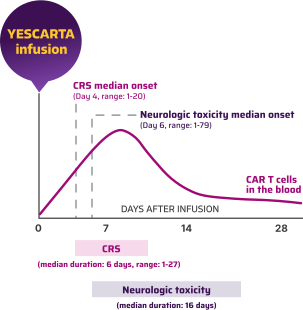
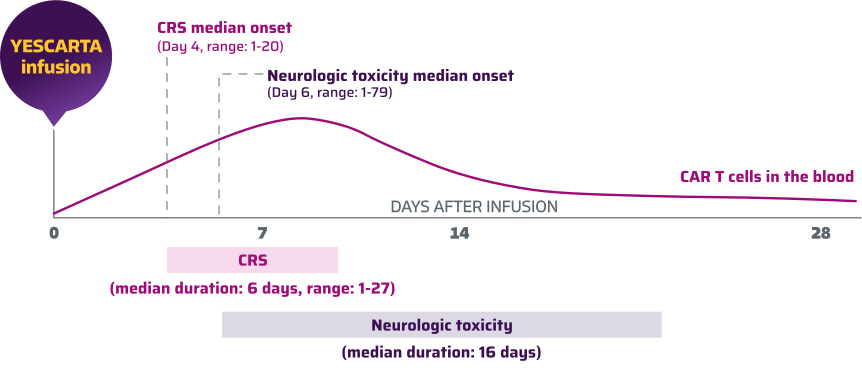
Most cases of CRS and neurologic toxicity in ZUMA-5# occurred early and resolved quickly1**
CRS

Any Grade

84%

(n=123/146)

Grade 3–4

8%

Neurologic toxicity

Any Grade

77%

(n=112/146)

Grade 3–4

21%

  • In ZUMA-5,# the safety of YESCARTA was evaluated in 146 patients1††
    • No Grade 5 neurologic toxicities
  • Both CRS and neurologic toxicities, including fatal or life-threatening reactions, have occurred following treatment with YESCARTA1
    • Key manifestations of CRS in patients treated with YESCARTA (≥10%) included fever, hypotension, tachycardia, chills, hypoxia, headache, and fatigue
    • The most common neurologic toxicities in patients treated with YESCARTA (≥10%) included encephalopathy, headache, tremor, dizziness, aphasia, delirium, and insomnia
  • CRS and neurologic toxicity were generally reversible and were managed per established guidance1,4

 #The ZUMA-5 trial corresponds to Study 3 in the US Prescribing Information: see section 14.2.

**For the management of CRS, tocilizumab was administered to 74 (50%) of 148 patients, corticosteroids to 27 (18%) patients, and vasopressors to 8 (5%) patients.4 Monitor patients at least daily for 7 days following infusion for signs and symptoms of CRS and at least 2 weeks after infusion.1 Counsel patients to seek immediate medical attention should signs or symptoms of CRS occur at any time.1

For management of neurological events, corticosteroids were used in 53 (36%) patients and tocilizumab was used in 9 (6%; 7 of 9 patients had concurrent CRS).4 Neurologic toxicities occurred within the first 7 days of infusion in 74% of affected patients with iNHL.1 Monitor patients for signs or symptoms of neurologic toxicities at least daily for 7 days following infusion and for at least 2 weeks after infusion and treat promptly.1

††The primary safety analysis included 146 patients, including 124 patients with FL and 22 with MZL.1 The updated 5-year safety analysis included 124 patients with FL and 28 with MZL.2 YESCARTA is not indicated for MZL (marginal zone lymphoma).1

Summary of adverse reactions observed in at least 10% of patients treated with YESCARTA in ZUMA-5# (N=146)1

ADVERSE REACTION Any grade (%) Grade ≥3 (%)
Blood and Lymphatic System Disorder
Febrile neutropenia‡‡ 41 41
Cardiac Disorders
Tachycardia‡‡ 44 1
Arrhythmia‡‡ 21 2
Gastrointestinal Disorders
Nausea 40 0
Diarrheaa 29 1
Constipation 28 0
Vomiting 24 1
Abdominal pain‡‡ 16 0
General Disorders and Administration Site Conditions
Fever 85 8
Fatigue‡‡ 49 1
Chills 29 0
Edema‡‡ 13 1
Immune System Disorders
Cytokine release syndrome Cytokine release syndrome 84 8
Immunoglobulins decreased‡‡ Immunoglobulins decreased‡‡ 18 1
Infections and Infestations
Infections with pathogen unspecified Infections with pathogen unspecified 45 14
Pneumonia‡‡ 13 8
Fungal infections 12 2
Viral infections 13 2
Metabolism and Nutrition Disorders
Decreased appetite‡‡ 26 1
ADVERSE REACTION Any grade (%) Grade ≥3 (%)
Musculoskeletal and Connective Tissue Disorders
Musculoskeletal painb 40 1
Motor dysfunctionc 18 2
Nervous System Disorders
Encephalopathyd 49 16
Headache 45 1
Tremor 31 1
Dizziness‡‡ 20 0
Aphasia 14 4
Neuropathy peripheral‡‡ 12 0
Ataxiae 10 0
Psychiatric Disorders
Deliriumf 16 5
Insomnia 16 0
Affective disorderg 10 1
Respiratory, Thoracic, and Mediastinal Disorders
Cough‡‡ 25 0
Hypoxia 23 8
Dyspnea‡‡ 12 1
Nasal congestion 10 0
Skin and Subcutaneous Tissue Disorders
Rash‡‡ 19 3
Vascular Disorders
Hypotension‡‡ 51 4
Hypertension 13 6
Thrombosish 12 4
  • Grade 3-4 laboratory abnormalities occurring in ≥10% of patients treated with YESCARTA in ZUMA-5# were lymphocyte decrease (96%), leukocyte decrease (94%), neutrophil decrease (92%), platelet decrease (35%), hemoglobin decrease (32%), phosphate decrease (25%), sodium decrease (10%), glucose increase (10%), and calcium decrease (10%). Baseline lab values were assessed prior to lymphodepleting chemotherapy1

‡‡Represents a composite of multiple, related preferred terms.

 aDiarrhea includes diarrhea, colitis, enteritis.

 bMusculoskeletal pain includes musculoskeletal pain, arthralgia, back pain, bone pain, flank pain, groin pain, musculoskeletal chest pain, myalgia, neck pain, osteoarthritis, pain in extremity.

 cMotor dysfunction includes motor dysfunction, muscle rigidity, muscle spasms, muscle strain, muscular weakness.

 dEncephalopathy includes agraphia, amnesia, aphonia, apraxia, CAR T-cell–related encephalopathy syndrome, cognitive disorder, disturbance in attention, dysarthria, dysgraphia, dyskinesia, encephalopathy, lethargy, loss of consciousness, memory impairment, somnolence, speech disorder, confusional state, mental status changes, immune effector cell-associated neurotoxicity, neurotoxicity, toxic encephalopathy.

 eAtaxia includes ataxia, balance disorder, gait disturbance, vestibular disorder.

 fDelirium includes agitation, delirium, hallucination, restlessness.

 gAffective disorder includes anxiety, depression, impulsive behavior, mania, panic attack.

 hThrombosis includes deep vein thrombosis, embolism, peripheral ischemia, pulmonary embolism, thrombosis in device, vascular occlusion, jugular vein thrombosis.

Safety outcomes of the ~5-year analysis2††

After the 3-year cutoff:

  • 13 treated patients experienced new adverse reactions
  • 1 serious adverse reaction considered related to YESCARTA (Grade 3 myelodysplastic syndrome)
  • Non-relapse mortalities occurred in 23 patients (15%): 11 (7%) infection related and associated with B-cell aplasia, 6 (4%) due to second primary malignancies (5 acute leukemia and 1 anal cancer), 3 (2%) cardiac related, 2 (1%) unknown, and 1 (1%) due to CRS
  • 8 patients died
  • No new safety signals after a median follow-up of ≥5 years

††The primary safety analysis included 146 patients, including 124 patients with FL and 22 with MZL.1 The updated 5-year safety analysis included 124 patients with FL and 28 with MZL.2 YESCARTA is not indicated for MZL (marginal zone lymphoma).1

Consider YESCARTA for adult patients with R/R FL

YESCARTA is a one-time treatment for adults with1:
R/R FL after ≥2 lines of systemic therapy

This indication is approved under accelerated approval based on response rate. Continued approval for this indication may be contingent upon verification and description of clinical benefit in confirmatory trial(s).

CAR T=chimeric antigen receptor T-cell; CD20=cluster of differentiation 20; CI=confidence interval; CR=complete remission; CRS=cytokine release syndrome; DOR=duration of response; FDA=Food and Drug Administration; FL=follicular lymphoma; iNHL=indolent non-Hodgkin lymphoma; IRC=independent review committee; KM=Kaplan Meyer; mDOR=median duration of response; MZL=marginal zone lymphoma; NE=not estimable; NR=not reached; ORR=objective response rate; OS=overall survival; PFS=progression-free survival; PR=partial remission; R/R=relapsed or refractory; USPI=United States Prescribing Information.

Tap for Important Safety Information, including BOXED WARNING.

IMPORTANT SAFETY INFORMATION

WARNING: CYTOKINE RELEASE SYNDROME, NEUROLOGIC TOXICITIES, and SECONDARY HEMATOLOGICAL MALIGNANCIES

  • Cytokine Release Syndrome (CRS), including fatal or life-threatening reactions, occurred in patients receiving YESCARTA. Do not administer YESCARTA to patients with active infection or inflammatory disorders. Treat severe or life-threatening CRS with tocilizumab or tocilizumab and corticosteroids.
  • Neurologic toxicities, including fatal or life-threatening reactions, occurred in patients receiving YESCARTA, including concurrently with CRS or after CRS resolution. Monitor for neurologic toxicities after treatment with YESCARTA. Provide supportive care and/or corticosteroids as needed.
  • T cell malignancies have occurred following treatment of hematologic malignancies with BCMA- and CD19-directed genetically modified autologous T cell immunotherapies, including YESCARTA.

CYTOKINE RELEASE SYNDROME (CRS)

CRS, including fatal or life-threatening reactions, occurred following treatment with YESCARTA. CRS occurred in 90% (379/422) of patients with non-Hodgkin lymphoma (NHL), including ≥ Grade 3 CRS in 9%. CRS occurred in 93% (256/276) of patients with large B-cell lymphoma (LBCL), including ≥ Grade 3 in 9%. Among patients with LBCL who died after receiving YESCARTA, 4 had ongoing CRS events at the time of death. For patients with LBCL in Study 2, the median time to onset of CRS was 2 days following infusion (range: 1-12 days) and the median duration was 7 days (range: 2-58 days). For patients with LBCL in Study 1, the median time to onset of CRS was 3 days following infusion (range: 1-10 days) and the median duration was 7 days (range: 2-43 days).

CRS occurred in 84% (123/146) of patients with indolent non-Hodgkin lymphoma (iNHL) in Study 3, including ≥ Grade 3 CRS in 8%. Among patients with iNHL who died after receiving YESCARTA, 1 patient had an ongoing CRS event at the time of death. The median time to onset of CRS was 4 days (range: 1-20 days) and median duration was 6 days (range: 1-27 days) for patients with iNHL.

Key manifestations of CRS (≥ 10%) in all patients combined included fever (85%), hypotension (40%), tachycardia (32%), chills (22%), hypoxia (20%), headache (15%), and fatigue (12%). Serious events that may be associated with CRS include, cardiac arrhythmias (including atrial fibrillation and ventricular tachycardia), renal insufficiency, cardiac failure, respiratory failure, cardiac arrest, capillary leak syndrome, multi-organ failure, and hemophagocytic lymphohistiocytosis/macrophage activation syndrome (HLH/MAS).

The impact of tocilizumab and/or corticosteroids on the incidence and severity of CRS was assessed in 2 subsequent cohorts of LBCL patients in Study 2. Among patients who received tocilizumab and/or corticosteroids for ongoing Grade 1 events, CRS occurred in 93% (38/41), including 2% (1/41) with Grade 3 CRS; no patients experienced a Grade 4 or 5 event. The median time to onset of CRS was 2 days (range: 1-8 days) and the median duration of CRS was 7 days (range: 2-16 days). Prophylactic treatment with corticosteroids was administered to a cohort of 39 patients for 3 days beginning on the day of infusion of YESCARTA. Thirty-one of the 39 patients (79%) developed CRS and were managed with tocilizumab and/or therapeutic doses of corticosteroids with no patients developing ≥ Grade 3 CRS. The median time to onset of CRS was 5 days (range: 1-15 days) and the median duration of CRS was 4 days (range: 1-10 days). Although there is no known mechanistic explanation, consider the risk and benefits of prophylactic corticosteroids in the context of pre-existing comorbidities for the individual patient and the potential for the risk of Grade 4 and prolonged neurologic toxicities.

Confirm that 2 doses of tocilizumab are available prior to infusion of YESCARTA. Monitor patients at least daily for 7 days following infusion for signs and symptoms of CRS. Monitor patients for signs or symptoms of CRS for 2 weeks after infusion. Counsel patients to seek immediate medical attention should signs or symptoms of CRS occur at any time. At the first sign of CRS, institute treatment with supportive care, tocilizumab, or tocilizumab and corticosteroids as indicated.

NEUROLOGIC TOXICITIES

Neurologic toxicities including immune effector cell-associated neurotoxicity syndrome (ICANS) that were fatal or life-threatening occurred following treatment with YESCARTA. Neurologic toxicities occurred in 78% (330/422) of patients with NHL (excluding central nervous system lymphoma) receiving YESCARTA, including ≥ Grade 3 in 25% in Study 1, Study 2, and Study 3.

Neurologic toxicities occurred in 87% (94/108) of patients with LBCL in Study 2, including ≥ Grade 3 in 31% and in 74% (124/168) of patients in Study 1 including ≥ Grade 3 in 25%. The median time to onset was 4 days (range: 1-43 days) and the median duration was 17 days for patients with LBCL in Study 2. The median time to onset for neurologic toxicity was 5 days (range: 1-133 days) and median duration was 15 days in patients with LBCL in Study 1. Neurologic toxicities occurred in 77% (112/146) of patients with iNHL, including ≥ Grade 3 in 21%. The median time to onset was 6 days (range: 1-79 days) and the median duration was 16 days. Ninety-eight percent of all neurologic toxicities in patients with LBCL and 99% of all neurologic toxicities in patients with iNHL occurred within the first 8 weeks of YESCARTA infusion. Neurologic toxicities occurred within the first 7 days of infusion in 87% of affected patients with LBCL and 74% of affected patients with iNHL.

The most common neurologic toxicities (≥ 10%) in all patients combined included encephalopathy (50%), headache (43%), tremor (29%), dizziness (21%), aphasia (17%), delirium (15%), and insomnia (10%). Prolonged encephalopathy lasting up to 173 days was noted. Serious events, including aphasia, leukoencephalopathy, dysarthria, lethargy, and seizures occurred. Fatal and serious cases of cerebral edema and encephalopathy, including late-onset encephalopathy, have occurred. Cerebral edema occurred at a higher frequency in patients with primary mediastinal large B-cell lymphoma (PMBCL).

The impact of tocilizumab and/or corticosteroids on the incidence and severity of neurologic toxicities was assessed in 2 subsequent cohorts of LBCL patients in Study 2. Among patients who received corticosteroids at the onset of Grade 1 toxicities, neurologic toxicities occurred in 78% (32/41) and 20% (8/41) had Grade 3 neurologic toxicities; no patients experienced a Grade 4 or 5 event. The median time to onset of neurologic toxicities was 6 days (range: 1-93 days) with a median duration of 8 days (range: 1-144 days). Prophylactic treatment with corticosteroids was administered to a cohort of 39 patients for 3 days beginning on the day of infusion of YESCARTA. Of those patients, 85% (33/39) developed neurologic toxicities; 8% (3/39) developed Grade 3 and 5% (2/39) developed Grade 4 neurologic toxicities. The median time to onset of neurologic toxicities was 6 days (range: 1-274 days) with a median duration of 12 days (range: 1-107 days). Prophylactic corticosteroids for management of CRS and neurologic toxicities may result in higher grade of neurologic toxicities or prolongation of neurologic toxicities, delay the onset, and decrease the duration of CRS.

Neurologic toxicities occurred in 85% (11/13) of patients with relapsed/refractory primary central nervous system lymphoma (PCNSL) in Study 4. 31% (4/13) of patients had Grade 3 neurologic toxicities. The median time to onset of neurologic toxicities was 3 days (range: 1 to 9 days) and the median time to onset of first Grade ≥ 3 neurologic toxicity was 9.5 days (range: 5 to 158 days). The median duration of neurologic toxicities was 59 days (range: 52 to 87 days) while 45% (5/11) of patients had ongoing neurological toxicities at the time of study withdrawal, death, or data cut off. The most common neurologic toxicities (≥ 10%) in patients with PCNSL included confusional state (38%), headache (31%), somnolence (31%), disturbance in attention (23%), lethargy (23%), tremor (23%), gait disturbance (15%), hypersomnia (15%), insomnia (15%), and seizures (15%).

Monitor patients for signs and symptoms of neurologic toxicities following infusion at least daily for 7 days; and for 2 weeks thereafter and treat promptly. In patients with PMBCL, closely monitor for signs and symptoms of cerebral edema. Advise patients to avoid driving for at least 2 weeks following infusion.

HYPERSENSITIVITY REACTIONS

Allergic reactions may occur with the infusion of YESCARTA. Serious hypersensitivity reactions, including anaphylaxis, may be due to dimethyl sulfoxide (DMSO) or residual gentamicin in YESCARTA.

SERIOUS INFECTIONS

Severe or life-threatening infections occurred after YESCARTA infusion. Infections (all grades) occurred in 45% of patients with NHL. Grade 3 or higher infections occurred in 17% of patients, including ≥ Grade 3 infections with an unspecified pathogen in 12%, bacterial infections in 5%, viral infections in 3%, and fungal infections in 1%. YESCARTA should not be administered to patients with clinically significant active systemic infections. Monitor patients for signs and symptoms of infection before and after infusion and treat appropriately. Administer prophylactic antimicrobials according to local guidelines.

Febrile neutropenia was observed in 36% of patients with NHL and may be concurrent with CRS. In the event of febrile neutropenia, evaluate for infection and manage with broad-spectrum antibiotics, fluids, and other supportive care as medically indicated.

In immunosuppressed patients, including those who have received YESCARTA, life-threatening and fatal opportunistic infections including disseminated fungal infections (e.g., candida sepsis and aspergillus infections) and viral reactivation (e.g., human herpes virus-6 [HHV-6] encephalitis and JC virus progressive multifocal leukoencephalopathy [PML]) have been reported. The possibility of HHV-6 encephalitis and PML should be considered in immunosuppressed patients with neurologic events and appropriate diagnostic evaluations should be performed.

Hepatitis B virus (HBV) reactivation, in some cases resulting in fulminant hepatitis, hepatic failure, and death, has occurred in patients treated with drugs directed against B cells, including YESCARTA. Perform screening for HBV, HCV, and HIV and management in accordance with clinical guidelines before collection of cells for manufacturing.

PROLONGED CYTOPENIAS

Patients may exhibit cytopenias for several weeks following lymphodepleting chemotherapy and YESCARTA infusion. Grade 3 or higher cytopenias not resolved by Day 30 following YESCARTA infusion occurred in 39% of all patients with NHL and included neutropenia (33%), thrombocytopenia (13%), and anemia (8%). Monitor blood counts after infusion.

HYPOGAMMAGLOBULINEMIA

B-cell aplasia and hypogammaglobulinemia can occur in patients receiving YESCARTA. Hypogammaglobulinemia was reported as an adverse reaction in 14% of all patients with NHL. Monitor immunoglobulin levels after treatment and manage using infection precautions, antibiotic prophylaxis, and immunoglobulin replacement.

The safety of immunization with live viral vaccines during or following YESCARTA treatment has not been studied. Vaccination with live virus vaccines is not recommended for at least 6 weeks prior to the start of lymphodepleting chemotherapy, during YESCARTA treatment, and until immune recovery following treatment.

SECONDARY MALIGNANCIES

Patients treated with YESCARTA may develop secondary malignancies. T cell malignancies have occurred following treatment of hematologic malignancies with BCMA- and CD19-directed genetically modified autologous T cell immunotherapies, including YESCARTA. Mature T cell malignancies, including CAR-positive tumors, may present as soon as weeks following infusion, and may include fatal outcomes.

Monitor life-long for secondary malignancies. In the event that a secondary malignancy occurs, contact Kite at 1-844-454-KITE (5483) to obtain instructions on patient samples to collect for testing.

ADVERSE REACTIONS

The most common non-laboratory adverse reactions (incidence ≥ 30%) in patients with FL in Study 3 included fever, CRS, hypotension, encephalopathy, fatigue, headache, infections with pathogen unspecified, tachycardia, febrile neutropenia, musculoskeletal pain, nausea, and tremor.

The most common (≥30%) Grade 3-4 laboratory abnormalities in patients with FL in Study 3 included lymphocyte decrease, leukocyte decrease, neutrophil decrease, platelet decrease, and hemoglobin decrease.

Please see full Prescribing Information, including BOXED WARNING and Medication Guide.

Authorized Treatment Centers are independent facilities that dispense Kite CAR T therapies. Choice of an Authorized Treatment Center is within the sole discretion of the physician and patient. Kite does not endorse any individual treatment sites.

INDICATION

YESCARTA® is a CD19-directed genetically modified autologous T cell immunotherapy indicated for the treatment of adult patients with relapsed or refractory follicular lymphoma (FL) after two or more lines of systemic therapy.

This indication is approved under accelerated approval based on response rate. Continued approval for this indication may be contingent upon verification and description of clinical benefit in confirmatory trial(s).

References: 1. YESCARTA® axicabtagene ciloleucel). Prescribing information. Kite Pharma, Inc; 2026. 2. Neelapu SS, Chavez JC, Sehgal AR, et al. Five-year follow-up analysis of ZUMA-5: axicabtagene ciloleucel in relapsed/refractory indolent non-Hodgkin lymphoma. J Clin Oncol. 2025:JCO2500668. doi:10.1200/JCO-25-00668 3. Neelapu SS, Chavez JC, Sehgal AR, et al. Five-year follow-up analysis of ZUMA-5: axicabtagene ciloleucel in relapsed/refractory indolent non-Hodgkin lymphoma. J Clin Oncol. 2025(suppl):JCO2500668. doi:10.1200/JCO-25-00668 4. Jacobson CA, Chavez JC, Sehgal AR, et al. Axicabtagene ciloleucel in relapsed or refractory indolent non-Hodgkin lymphoma (ZUMA-5): a single-arm, multicentre, phase 2 trial. Lancet Oncol. 2022;23(1):91-103. doi:10.1016/S1470-2045(21)00591-X 5. Jacobson CA, Chavez JC, Sehgal AR, et al. Axicabtagene ciloleucel in relapsed or refractory indolent non-Hodgkin lymphoma (ZUMA-5): a single-arm, multicentre, phase 2 trial. Lancet Oncol. 2022;23(1)(suppl):1-154. doi:10.1016/S1470-2045(21)00591-X 6. Referenced with permission from the NCCN Clinical Practice Guidelines in Oncology (NCCN Guidelines®) for B-Cell Lymphomas V.4.2026. © National Comprehensive Cancer Network, Inc. 2026. All rights reserved. Accessed June 3, 2026. To view the most recent and complete version of the guideline, go online to NCCN.org.